
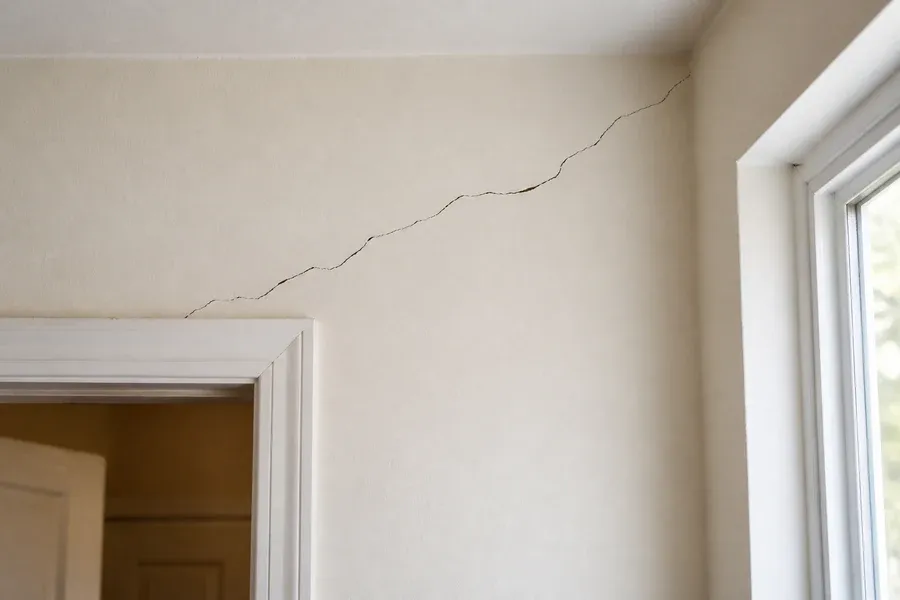
Interior wall cracks often start small, but their pattern matters. The best response begins with diagnosis, not quick patching.
Some cracks are cosmetic, while others suggest moisture, stress, or movement. Homeowners should understand the likely cause before choosing any repair method.
How to Identify Interior Wall Cracks
Interior wall cracks should be judged by shape, location, width, and change over time. First, look at whether the crack is vertical, diagonal, horizontal, stepped, or straight.
A stable hairline crack may only affect paint, plaster skim, or drywall compound. A widening crack suggests that movement may still be active behind the surface.
Check nearby doors, windows, corners, ceilings, and trim lines. Also note whether the wall feels soft, bowed, damp, hollow, or uneven.
Cracks near openings deserve closer attention because stress collects around frames. Door corners and window corners often show early signs of wall movement.
Warning Signs of Interior Wall Cracks
Some warning signs suggest more than normal surface aging. Interior wall cracks that widen over weeks or months need careful monitoring.
A crack with staining, bubbling paint, peeling wallpaper, or musty smells suggests moisture. Repair should wait until the damp source is found.
Sticking doors, sloping floors, and distorted trim are stronger warning signals. A tiny stable paint crack is usually much less concerning.
Several cracks appearing together may point toward wider building movement. Cracks crossing connected surfaces should not be dismissed as simple paint defects.
Main Causes of Interior Wall Cracks
Interior wall cracks can come from normal aging, seasonal stress, moisture, workmanship issues, or structural movement. The cause depends on the pattern and surrounding clues.
Seasonal expansion is common when indoor humidity changes repeatedly. Drywall, plaster, timber, and paint can move slightly as conditions change.
Minor settlement may create narrow cracks near doors, windows, or ceiling lines. Older houses can also show small changes after heavy rain, dry weather, or temperature shifts.
Drywall joint cracks often follow straight seam lines between boards. This pattern is usually judged by location, width, and whether it returns after repair.
For general background on wallboard materials, this overview of drywall construction explains how drywall sheets and joints are formed.
Moisture can weaken plaster, joint compound, and painted surfaces over time. Condensation, hidden leaks, roof problems, and pipe routes should be checked before repair.
Poor workmanship may leave weak joints, thin compound layers, or badly prepared surfaces. In those cases, cracks can appear soon after decorating or renovation work.
Foundation or framing movement is less common, but more serious. These cracks often appear with distortion, repeated growth, sloping floors, or jammed doors.
How to Confirm the Cause
Confirming the cause means checking evidence before deciding any fix. Photograph the crack clearly and record its widest visible point.
Mark both ends lightly with pencil and add the date. Compare the marks after several weeks or after a clear seasonal change.
Use a level near door frames, trim, and visible wall edges. Do not rely on one measurement from an uneven or badly finished surface.
Check moisture clues before assuming movement is the main problem. Inspect bathrooms nearby, rooms above, exterior walls, pipe routes, and ceiling edges.
If the crack appears with stains, peeling paint, or a musty smell, first check the cause of damp patches on walls before planning any surface repair.
Look outside if cracks sit near exterior corners or openings. Blocked gutters, poor drainage, and wet ground can increase moisture stress on walls.
A recurring crack usually means the cause remains active. Repeated filling without diagnosis often wastes time and hides useful evidence.
First Steps for Interior Wall Cracks
Interior wall cracks should be documented before any cosmetic work begins. Note the room, wall position, crack length, direction, and nearby symptoms.
Take one close photo and one wider room photo. Include a ruler or coin so the crack size is easier to compare later.
Do not sand, fill, or repaint a damp damaged area. Moisture checks should always come before decoration.
If the crack is stable, plan a suitable cosmetic repair later. If it grows, keep monitoring and arrange a professional inspection.
For a dry, stable, and narrow crack, follow a separate guide on repairing hairline wall cracks instead of treating this as a moisture or movement problem.
Keep heating and ventilation steady while you observe changes. Avoid sudden humidity swings during the monitoring period.
When to Call a Professional
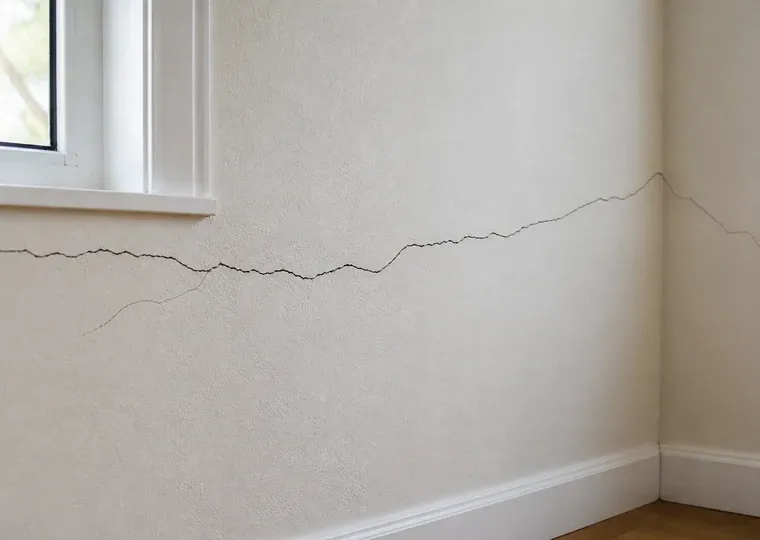
Call a professional when cracks show movement, moisture, or distortion. Widening diagonal cracks near doors need proper assessment.
You should also get help when several cracks appear together. Professional advice matters when floors slope, frames shift, or cracks return quickly.
Horizontal cracks, bulging surfaces, and repeated cracking need closer inspection. The right specialist depends on the suspected cause.
A plumber may be needed for leaks or wet wall cavities. A structural engineer assesses movement, settlement, framing, and foundation concerns.
Do not ignore cracks paired with electrical risk, mould, or persistent dampness. Safety should come before appearance or convenience.
Prevention Tips for Interior Wall Cracks
Preventing interior wall cracks means reducing stress on wall materials. Keep indoor humidity reasonably steady through changing seasons.
Use ventilation in bathrooms, kitchens, and laundry areas every day. Repair leaks quickly before moisture weakens nearby surfaces.
Keep gutters clear and drainage directed away from the foundation. This reduces exterior moisture pressure around walls and lower structures.
Avoid heavy fixtures without proper anchors and wall support. Overloaded shelves can stress drywall around weak fixing points.
After renovations, watch new joints through one full season. Slight movement after fresh plastering is not always alarming.
Maintain paint, sealed transitions, and ventilation before defects spread. Prevention is usually easier than repeated cosmetic repair.
Symptoms Table
This table separates common symptoms from likely causes and first checks. It should guide decisions, not replace professional judgment.
|
Symptom |
Likely Cause |
How to Confirm |
First Action |
|---|---|---|---|
|
Thin vertical crack |
Minor settlement or drying shrinkage |
Measure width and monitor change |
Record size and recheck later |
|
Diagonal crack near door |
Local movement or frame stress |
Check door alignment and nearby trim |
Monitor surrounding surfaces |
|
Crack with stains |
Moisture, leak, or condensation |
Check dampness, smell, and pipe routes |
Find moisture source before repair |
|
Straight seam crack |
Drywall joint movement |
See whether it follows board edges |
Confirm stability before cosmetic repair |
|
Horizontal crack with bulging |
Pressure or structural movement |
Look for bowing and repeated growth |
Call a qualified professional |
FAQ
This FAQ focuses on diagnosis, prevention, and warning signs. For repair steps, use a separate crack repair guide.
Are interior wall cracks always serious?
No, many interior wall cracks are cosmetic and stable. Pattern, growth, moisture, and nearby damage decide the real level of concern.
Why do cracks appear around doors and windows?
Doors and windows interrupt the wall surface and collect stress. Small building movements often show around those openings first.
Seasonal changes can also affect nearby framing and trim. Sticking doors or widening cracks need closer inspection.
Can humidity cause cracks in interior walls?
Yes, humidity changes can expand and shrink wall materials. Condensation can also weaken paint, filler, plaster skim, and drywall compound.
Stable humidity reduces repeated stress on finished surfaces. Good ventilation also lowers moisture problems near cold walls.
Should I fill a crack immediately?
Not always, because quick filling can hide useful evidence. First, check moisture, movement, width, and surrounding wall condition.
How often should I check wall cracks?
Check new cracks monthly until you understand their behavior. After that, inspect them during seasonal maintenance and heavy rain periods.
Photograph changes if the crack grows, spreads, stains, or returns. Call a professional if movement appears faster or more widespread.
Final Advice on Interior Wall Cracks
Interior wall cracks make more sense when you read the pattern. Diagnosis should always come before sanding, filling, or repainting.
Most small cracks are manageable, but some deserve proper attention. Watch for growth, moisture, distortion, and repeated cracking after repairs.
Keep humidity, drainage, and ventilation under steady control. Careful observation prevents unnecessary repairs and catches serious problems earlier.